I look at the body as a whole
What guides my work: nervous regulation, preventive health, stress management, sleep and digestive disorders, and supporting women through hormonal disorders.
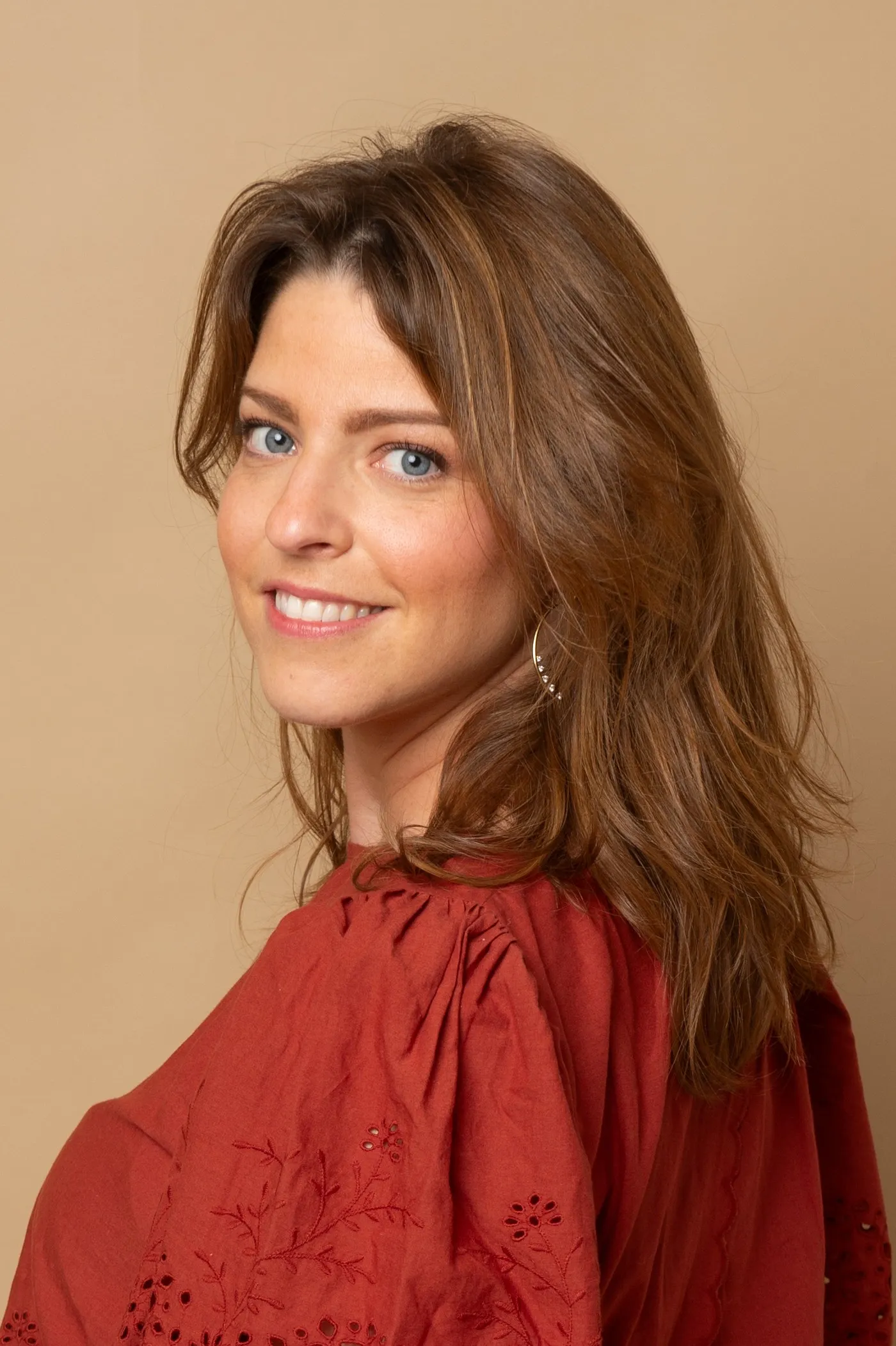
Osteopath D.O. I see you to ease bodily discomfort and tension. By taking your pain in hand, I make daily life more comfortable. I care about following you at every age, from newborns to older adults, and about seeing you make progress in your health.
By supporting the regulation of the autonomic nervous system, I work with sleep problems as much as with digestion and weight concerns.
I also work on the tension linked to stress and to trauma: sports injuries, the accidents of life and poor posture, all of which disturb the body's capacity to recover.
Lastly, I support women towards regular, physiological menstrual cycles, and towards easing the symptoms of menopause.
Supporting fertility, easing the aches of pregnancy, preparing the body for birth, accompanying the postpartum period or simply easing the pain that comes with PMS: this is my daily work.
Posture is not about sitting up straight
I ask a lot of questions before I place my hands, because posture is shaped by habits far more than by how you sit. A shoulder that has been pulling for six months almost always tells a story about ribs, about breathing, or about a side that quietly became the practical side for carrying, leaning and sleeping.
Where the nervous system comes in
The body does not pick its tensions at random. Under sustained strain it settles into a watchful posture: the breath rises and shortens, the jaw clenches, the shoulders stop coming back down. These adaptations are useful for a few days. Held for months, they become the pain itself.
I do not act on what is weighing on you, but on what your body has kept of it. And that is a great deal: in practice, it is almost always where the relief happens.
Where my scope ends
I work on the functional: mobility, tension, how you carry your weight. Not on disease. That limit is not a reservation I accept grudgingly, it is what makes the rest solid.
In practice: I treat no disease, I question no prescription, and I will never ask you to stop medical care. When what I find falls outside my scope, or when two or three sessions have changed nothing, I send you back to your doctor rather than adding appointments.
The techniques I use
None of them is applied as a matter of course. The choice is made during the session, based on what I find, your build, and what you are comfortable with.
Myofascial work
Fascia are the sheets that wrap muscles, organs and joints, and connect them to one another. They are the reason tension in the pelvis can be felt in the opposite shoulder. The work here is slow and sustained, never abrupt.
See what this helps withThe cranial approach
Very light contact on the skull, the jaw and the base of the neck. Useful when tension involves the neck, the jaw or tension headaches, and particularly suited to newborns and to people who are sensitive to touch.
See what this helps withThe visceral approach
Organs move, with the breath and with the body. When that mobility drops, the discomfort often shows up elsewhere: the diaphragm, the lower back, the ribs. The work aims to give those areas some play back.
See what this helps withPosture and how you load
How you hold yourself, how your foot meets the ground, how you compensate without knowing it. That is often where the explanation lies for a pain that keeps coming back to the same spot despite the sessions.
See what this helps withWhat a session looks like
Always with attentiveness, respect and care. Everything is done with transparency and humility.
- 1ListeningWe take the time to understand what brings you here, your history, your background.
- 2AssessmentBody scan, locating the areas of tension, and postural examination.
- 3ExplanationI connect what I find to what you describe, and I explain it to you.
- 4TreatmentPrecise manual techniques, adapted to you and to your needs.
- 5AdviceWhat you can do at home, and when you should see a doctor.
Where I practise
Paris 9e practice
17 rue du Faubourg Montmartre75009 Paris
Getting there : Grands Boulevards (lignes 8, 9) · Cadet (ligne 7) · Le Peletier (ligne 7) · Richelieu-Drouot (lignes 8, 9)
Monday to Saturday, except Wednesday and Friday
Ground floor, no lift to take
See the practice and how to get thereCharenton-le-Pont practice
24 rue de Conflans94220 Charenton-le-Pont
Getting there : Liberté (ligne 8) · Charenton – Écoles (ligne 8)
Wednesday and Friday
Neighbourhood practice, a few minutes from the metro
See the practice and how to get there80 € · 45 min · Cheques and cash. Card payments are not accepted.